The House We Lost at Cards:
A Family Legend at Kipling's Bateman's

Ancestor Stories  ·  Family Legends  ·  Sussex  ·  July 2026
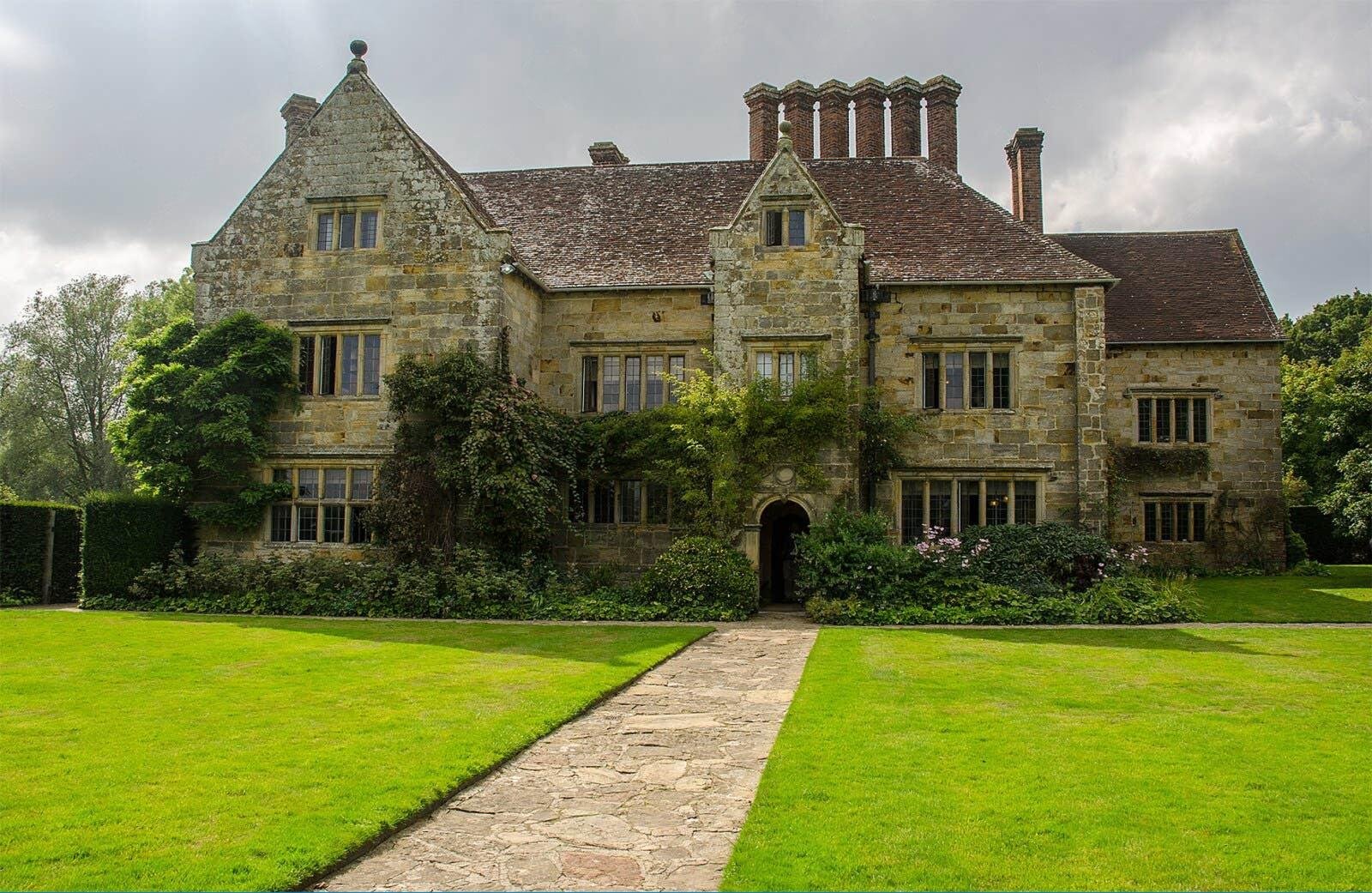
Bateman's, Burwash — the Jacobean house bought by Robert Pattenden in 1787 and by Rudyard Kipling in 1902

Bateman's, Burwash, East Sussex. Built c.1634; owned by the Pattenden family 1787–1824; home of Rudyard Kipling 1902–1936.

Every family has one: the story that gets told at Christmas, half in jest, that no one has ever actually checked. Ours arrived with the post.

A copy of Puck of Pook's Hill landed on the doormat last week, and over the kettle my husband produced the old chestnut from his side of the family — that generations ago, they had lost Bateman's in a card game. Bateman's, no less: the honey-coloured Jacobean house at Burwash where Rudyard Kipling lived from 1902, and where he wrote the very book that had just come through our letterbox. It is the sort of claim a researcher learns to smile at politely. Grand houses attract family legends the way old beams attract woodworm, and the card game is the most travelled plot device in English family folklore. But the pleasure of this work is that legends can be tested. So we tested it — and within an afternoon the polite smile had vanished entirely.

What the Record Says

The ownership history of Bateman's is unusually well documented, thanks largely to a bundle of title deeds at the East Sussex Record Office (catalogued as AMS5982/1) and the property historians who have worked through them. The house was built around 1634, probably by William Langham, and passed through the Newington and Butler families before reaching John Freeland, a Salehurst shopkeeper, in 1773. In March 1787, Freeland conveyed the estate to his step-son-in-law: Robert Pattenden (1754–1821), yeoman, for £1,050 — money Robert borrowed from Freeland himself. Robert had married Freeland's stepdaughter two years earlier, and already occupied a windmill he had built on the land.

The Pattendens held Bateman's for thirty-seven years. Robert married four times, buried three wives and several infant children at St Bartholomew's, Burwash, and died in June 1821. And then the estate slipped away. In March 1824 it was sold to a Londoner, Richard Smith Appleyard — Windmill Field for £530, the house and its remaining forty acres for £1,270. Robert's son John stayed on, no longer as owner but as tenant of the farm his father had bought; the 1841 census finds his widow, Mary Glyde Pattenden, still farming Bateman's with her children. By 1851 the family is gone from the returns altogether, and a bailiff's household sits in the house. Fifty years later, Kipling paid £9,300 for it.

Bateman's — The Pattenden Years, from the Deeds (ESRO AMS5982/1)

March 1787 — conveyed by John Freeland to Robert Pattenden, yeoman, for £1,050
June 1821 — death of Robert Pattenden; buried at St Bartholomew's, Burwash
March 1824 — estate sold to Richard Smith Appleyard of London
1841 census — Mary Glyde Pattenden, widow, farming Bateman's Farm as tenant
1851 census — the Pattendens gone; a bailiff's household in the house
28 July 1902 — Bateman's purchased by Rudyard Kipling for £9,300

Owned, then lost on the father's death, then rented back, then gone within a generation. If you wanted to design the documentary skeleton onto which a “lost it at cards” legend would naturally grow, you could not do better.

From the Parish Register to the Kitchen Table

The legend, though, belonged to a Collins family — and no Collins appears anywhere in the Bateman's record. This is where the family trees came in, and where the afternoon turned genuinely strange.

My husband's tree carries a Robert Pattenden, born 1754, died 1821 at Burwash, married to a Margaret who died there in 1804. The documented owner of Bateman's was Robert Pattenden, 1754–1821, whose third wife — the widowed Margaret Johnson, married 1794 — died in 1804. The tree gives her maiden name, Moon; the property record gives her widowed name, Johnson. Two sources describing the same woman from opposite ends of her life. Every checkable particular agreed.

And from that Robert, the tree runs in an unbroken line to the kitchen where the kettle had just boiled. His son James, born at Bateman's in 1797 during the family's ownership, lived through the 1824 sale as a young man and never left Burwash. James's son Albert, born in the village in 1834, went up to London. Albert's daughter Florence married a Collins in Brighton in 1898 — and there the story crossed surnames, travelling on as a Collins legend with its Pattenden origins quietly forgotten. Four more generations, and it reached my husband: the direct descendant of the man who bought Bateman's, telling the story of how his family lost it, without the faintest idea it was true.

Oral tradition is a remarkably faithful carrier of substance and a remarkably free editor of mechanism. The story survived five generations, a change of surname, and a move to London and back — and when it was finally checked against the deeds, its core held.

There was one further twist, which I record here mostly because no one would believe it otherwise. My own tree carries a long line of Pattendens — Waldron, West Hoathly, Ardingly — and when I climbed both lines upward they met, in the last years of the seventeenth century, at the same man: Thomas Pattenden of Waldron (1671–1749/50). His son Thomas begins my line; his son John begins the line that leads to Bateman's and, eventually, to my husband. Subject to verifying that junction in the Waldron registers, we appear to be distant cousins whose lines parted in the Sussex Weald around 1700 and reunited at a wedding in 1989.

What a Legend Is Actually Made Of

Was there a card game? The honest answer is that the record cannot say, and almost certainly never will. A gambling debt in the 1820s left no special paperwork; a man who lost his house at cards simply conveyed it, and the deed would read like any other sale. What the record can say is that the loss the legend commemorates was entirely real — and this, in my experience, is how family stories usually work. “Grandfather died and the estate had to be broken up” is true but tells poorly by firelight; “we lost it at cards” preserves the same essential fact — we had it, and it slipped through our fingers — in a form worth repeating for two hundred years.

There is still work to do, all of it at The Maltings in Lewes: the 1824 conveyance in full (recitals sometimes narrate the why of a sale, and any mention of debts would be eloquent), the Burwash baptisms to repair a wobbly date or two in the middle generations, and the Waldron registers to prove the cousinship. That is the sober postscript. The unsober one is that we now cannot walk past a National Trust sign for Bateman's without proprietary feelings.

The Moral, for Anyone Sitting on a Legend of Their Own

Family stories are not evidence — but they are maps. They tell you where to dig, and they are right far more often than their embellishments suggest. If your family has always claimed a lost house, a disgraced uncle, or a fortune that went astray, the claim itself is a research lead: somewhere beneath it there is very often a conveyance, a will, a chancery suit, or a burial register waiting to confirm the bones of it. Reading those documents, in the original hands, is precisely the work Heritage Script exists to do.

Primary Sources

The Bateman's title deeds are held at the East Sussex Record Office, The Maltings, Lewes, as AMS5982/1, and are summarised in the property history compiled by The Weald database (theweald.org). The Historic England list entries for Bateman's (1044063 and 1000734) and the National Trust heritage records were also consulted, together with the census returns for Bateman's Farm, Burwash, 1841–1891, and the 1902 conveyance to Rudyard Kipling recorded at The National Archives. Family data derives from two privately held family trees; generations above Thomas Pattenden (1671) are not relied upon in this account.

Filed under:   Family Legends Sussex Bateman's Kipling House History Title Deeds 19th Century

Have a Legend That Needs Testing?

Send me your historical document for a free sample transcription and no-obligation consultation.

Request Your Consultation