Scripts & Handwriting
Secretary Hand
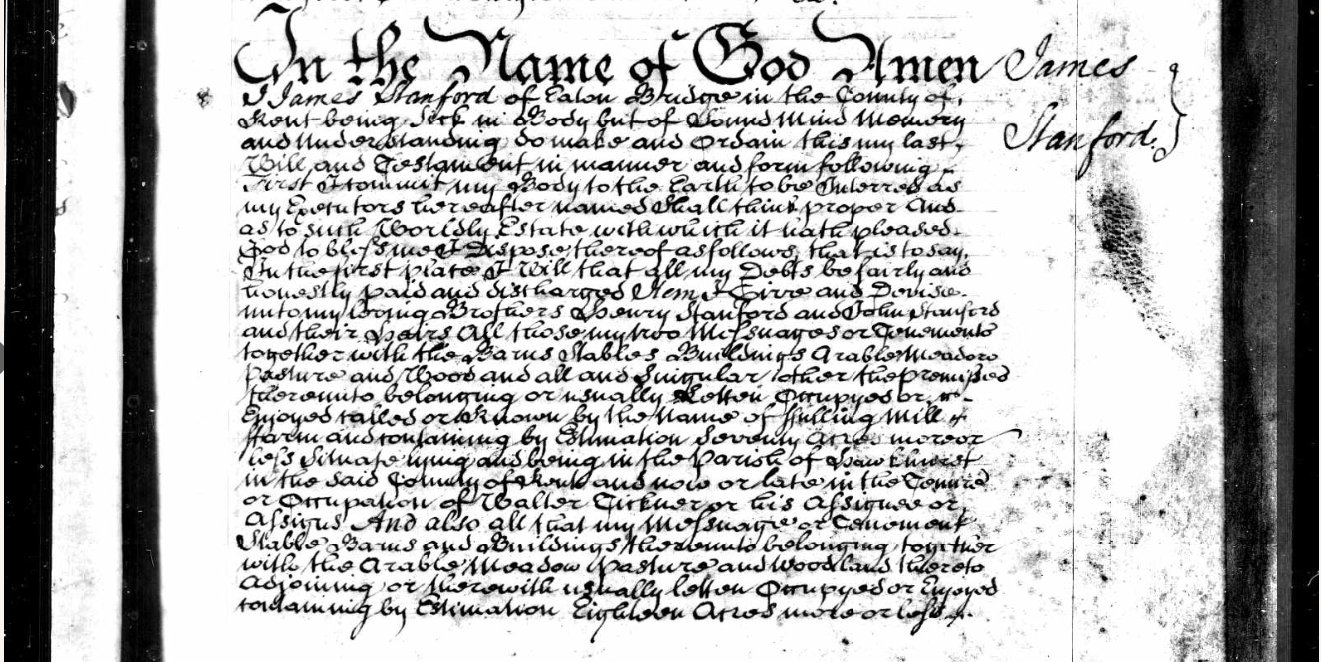
The dominant script used in English legal and administrative documents from roughly 1500 to 1700. The letterforms bear almost no resemblance to modern writing — the letter 'e' looks nothing like our 'e', 'r' can look like a 'v', and words are heavily abbreviated with marks above to indicate missing letters. Reading secretary hand is a specialist skill that takes years of training to develop. It is the script most likely to defeat a family historian encountering an early will or legal record.
Court Hand
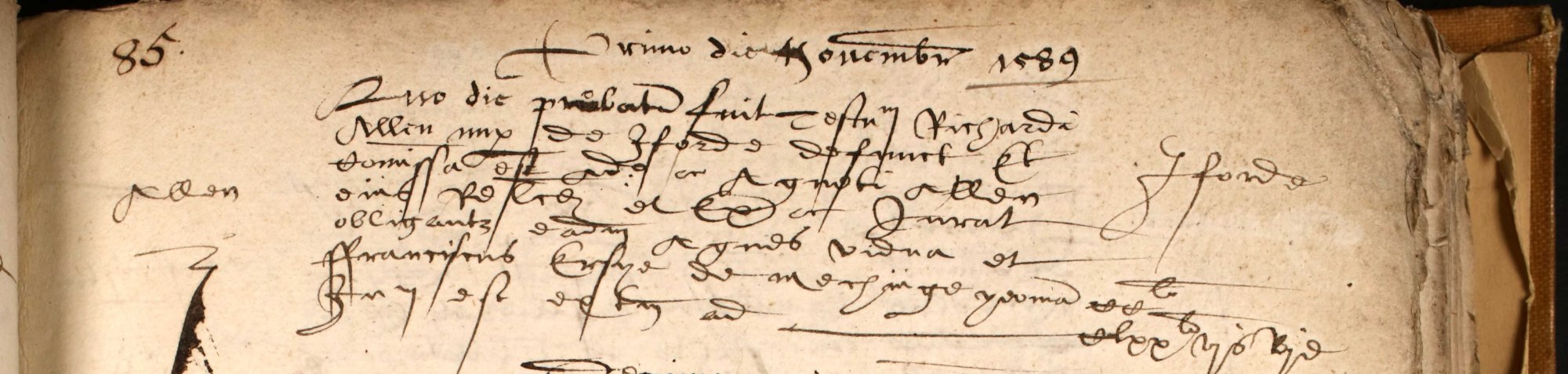
A formal variant of secretary hand used specifically in legal proceedings and official documents from the medieval period through to the 17th century. Court hand is even more stylised and compressed than standard secretary hand, written at speed by professional court clerks. Individual letters are frequently run together and abbreviated beyond recognition without specialist training.
Italic Hand
A rounder, more open script that began to replace secretary hand from the later 17th century onwards, influenced by Italian Renaissance writing styles. Italic hand is considerably more legible to modern eyes than secretary hand, though it still contains period abbreviations, archaic spelling, and occasional Latin phrases.
Copperplate
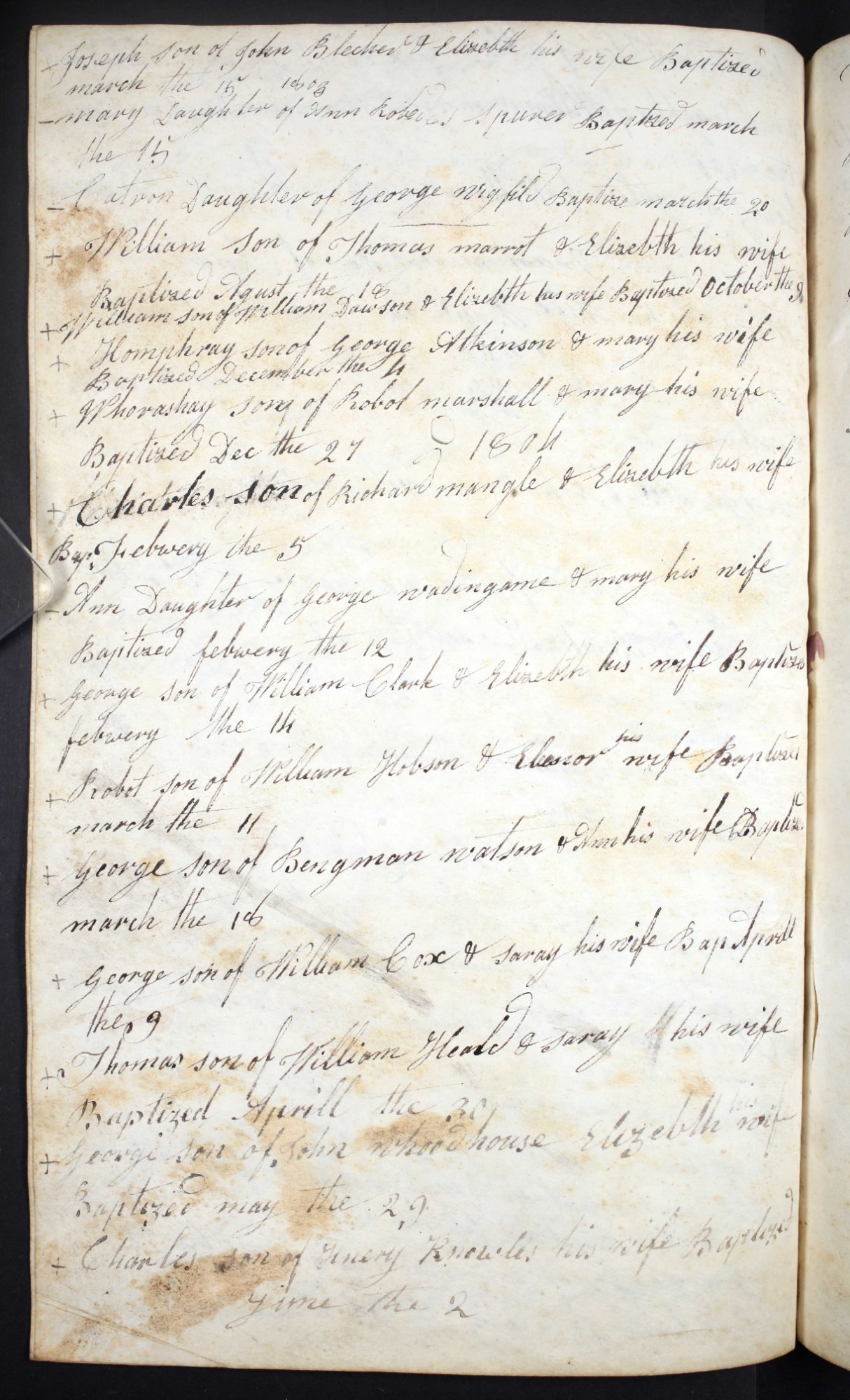
An elegant, flowing script that became fashionable from the 18th century and remained in common use through the Victorian period. Named after the engraving technique used to produce writing manuals. Copperplate is generally the most legible of the historical scripts to modern readers, though faded ink, cramped entries, and period spelling variations still present challenges.
Blackletter / Gothic
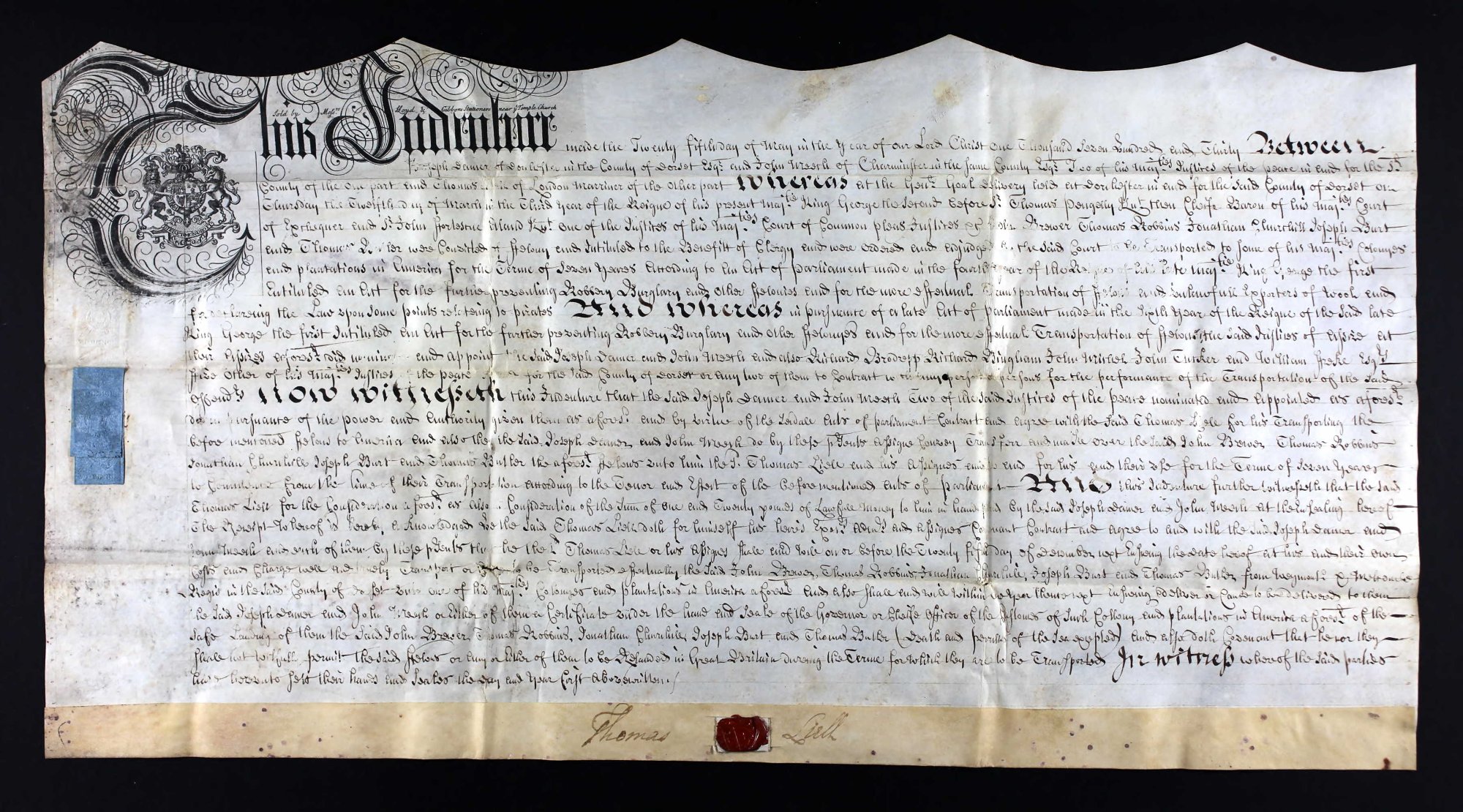
The angular, compressed script associated with medieval manuscripts and early printed books. Blackletter remained in use for formal printed headings — such as the opening lines of legal indentures — well into the 18th century. It can look completely alien to modern readers unfamiliar with it.
Engrossing Hand
A large, formal, carefully formed script used for important documents intended to be impressive and permanent — Royal charters, formal deeds, presentation copies. Engrossing hand is usually more legible than everyday secretary hand but can be challenging because of its elaborate flourishes and decorative letterforms.
Palaeography
The study and practice of reading historical handwriting. A palaeographer is someone trained to read and interpret manuscripts and documents written in historical scripts. The word comes from the Greek for 'ancient writing'.
Minuscule
Any script written in small letters, as opposed to majuscule (capital letters). In palaeography the term distinguishes smaller everyday scripts from formal display scripts.
Wills & Probate
Will / Testament
A legal document in which a person sets out their wishes for the distribution of their property after death. Before the 20th century, 'will' technically referred to the disposition of land and 'testament' to personal property, though the terms were often used interchangeably. A will must be proved (see Probate) before it can take legal effect.
Testator / Testatrix
The person who made the will. Testator is the masculine form, testatrix the feminine. You will frequently encounter these terms in probate records and in the body of wills themselves.
Probate
The legal process by which a will is proved to be valid and the executor is authorised to act on it. The word comes from the Latin probare, to prove. Probate was granted by church courts until 1858, when it passed to civil courts. A document with the probate clause at the top or bottom has been through this process.
Executor / Executrix
The person or persons named in a will to carry out its provisions — paying debts, collecting money owed, and distributing the estate. Executor is the masculine form, executrix the feminine. Being named as executor was a position of considerable trust.
Legatee
A person who receives a bequest (a gift of personal property) under a will. Someone who inherits land under a will is more technically called a devisee, though the terms are often used interchangeably in older documents.
Bequest
A gift of personal property left in a will. A gift of land or real estate is more technically called a devise. You will encounter both terms frequently in probate records.
Intestate
Dying without having made a valid will. When someone died intestate, the court granted Letters of Administration to a family member — usually the widow or eldest son — to administer the estate.
Letters of Administration
The document granted by a probate court authorising a named person (the administrator) to manage the estate of someone who died intestate, or where the named executor was unable or unwilling to act. Often abbreviated in records as 'admon' or 'adm'.
Codicil
An addition or amendment to an existing will, made after the will was originally written but before the testator's death. A codicil modifies or supplements the original will without replacing it entirely.
Inventory
A detailed list of a deceased person's personal possessions, usually compiled by appraisers shortly after death as part of the probate process. Probate inventories list every item in the house room by room with valuations, giving an extraordinarily vivid picture of how people actually lived. They are separate from the will itself.
Nuncupative Will
An oral (spoken) will, made without writing, usually on the deathbed in the presence of witnesses who later testified to its content in court. Nuncupative wills are relatively uncommon and survive in probate records as written summaries of witness testimony.
PCC
Prerogative Court of Canterbury — the senior probate court in England and Wales, with jurisdiction over estates of those who held property in more than one diocese, or whose estates were of significant value. PCC wills are held at The National Archives in the PROB series and are fully digitised. They frequently have Latin probate clauses.
PCY
Prerogative Court of York — the equivalent senior probate court for the northern province (roughly, north of the River Trent). PCY wills are held at the Borthwick Institute in York.
Latin Probate Clause
The block of Latin text found at the top and/or bottom of wills proved in church courts before 1733, when Latin was abolished in legal proceedings. The clause records the date of probate, the name of the deceased, and the name of the executor who took the oath. It follows a fixed formula that changed little over two centuries. See the Heritage Script Journal for a complete plain-English guide to reading the PCC probate clause.
Probate Act Book
A register kept by a probate court recording the granting of probate or administration. Each entry is brief — typically a few lines of heavily abbreviated Latin — but records the key facts: the deceased's name, parish, date of probate, and the name of the executor or administrator. For researchers whose ancestor's original will has not survived, the act book entry may be the only probate record that exists.
Residuary Estate
Everything left over after all specific bequests have been made, debts paid, and funeral expenses met. A will typically names a residuary legatee — often the spouse or eldest child — to receive whatever remains. 'The rest, residue and remainder of my estate' is a phrase you will encounter repeatedly in wills.
Legal & Property Terms
Messuage
A dwelling house together with its adjacent buildings (outhouses, barns, stables) and the land immediately attached to it. You will encounter this term constantly in wills and property deeds. When an ancestor leaves 'all that messuage or tenement', they are leaving a house with its associated buildings and land.
Tenement
In historical legal documents, a tenement does not mean a slum apartment block. It refers to any property held by tenure — essentially any landholding. The phrase 'messuages, lands, tenements and hereditaments' is a standard legal formula covering all types of property.
Hereditament
Any property that can be inherited — land, buildings, or rights over land. The word appears constantly in legal documents as part of the formula 'lands, tenements and hereditaments', which is a catch-all phrase covering all real property.
Indenture
A formal legal agreement between two or more parties. The name comes from the practice of cutting the document with an indented (wavy or zigzag) edge — each party kept one part, and the edges could be matched to prove authenticity. Indentures were used for property conveyances, apprenticeships, and many other formal agreements.
Moiety
A half share. If an ancestor leaves property to two people 'in equal moieties', each receives half. The word comes from the Old French for 'middle' and appears frequently in property documents.
Chattel
Personal property, as distinct from real property (land and buildings). Chattels include household goods, animals, money, and debts owed to the deceased. The distinction between real and personal property had important legal consequences for inheritance.
Fee Simple
The most complete form of land ownership — outright freehold that can be inherited by any heir and disposed of freely. When a will leaves land 'to X and his heirs forever' or 'to X in fee simple', it is giving the fullest possible ownership.
Copyhold
A form of land tenure in which the tenant's title was evidenced by a copy of the entry in the manorial court roll. Copyhold was one of the most common forms of land tenure in medieval and early modern England and was not finally abolished until 1926. Copyhold land could not be left by will in the usual way — it had to be surrendered to the lord of the manor and re-granted.
Devise
A gift of real property (land and buildings) made by will. To devise is to leave real property by will; the recipient is called a devisee. Contrasted with a bequest, which is a gift of personal property.
Conveyance
A legal document transferring ownership of land or property from one person to another. Before modern land registration, every property transaction required a conveyance drawn up by a solicitor. These documents are rich sources of family and property history.
Dower
The right of a widow to a life interest in a portion of her husband's real property — typically one third — which she could not be deprived of even if the husband tried to leave it elsewhere in his will. Dower rights appear frequently in property transactions, as land could not be sold without the wife's release of her dower rights.
Enfeoffment
The act of investing a person with a freehold estate — essentially, transferring ownership of land. The document recording this transfer is a feoffment. The term is most commonly encountered in medieval and early modern records.
Parish & Poor Law Records
Parish Register
The register of baptisms, marriages, and burials kept by each Church of England parish. Registration began in 1538 by order of Thomas Cromwell, though many early registers have not survived. Parish registers are the primary source for family history before civil registration began in 1837.
Banns
The public announcement of an intended marriage, read out in church on three successive Sundays before the ceremony, to allow anyone who knew of an impediment to come forward. Banns registers survive separately from marriage registers in many parishes.
Churchwarden
A lay officer of the Church of England parish, elected annually, responsible for the fabric of the church and various administrative duties. Churchwardens kept accounts, oversaw parish property, and were involved in poor law administration. Their accounts are a valuable source for local history.
Vestry
The governing body of a Church of England parish, made up of the principal ratepayers, responsible for maintaining the church, appointing parish officers, and administering the poor law. Vestry minutes record decisions affecting everyone in the parish.
Overseer of the Poor
The parish officer responsible for administering poor relief — collecting the poor rate, paying out relief, and managing the parish workhouse where one existed. Overseers' accounts and correspondence are a rich source for the lives of poorer ancestors.
Settlement Examination
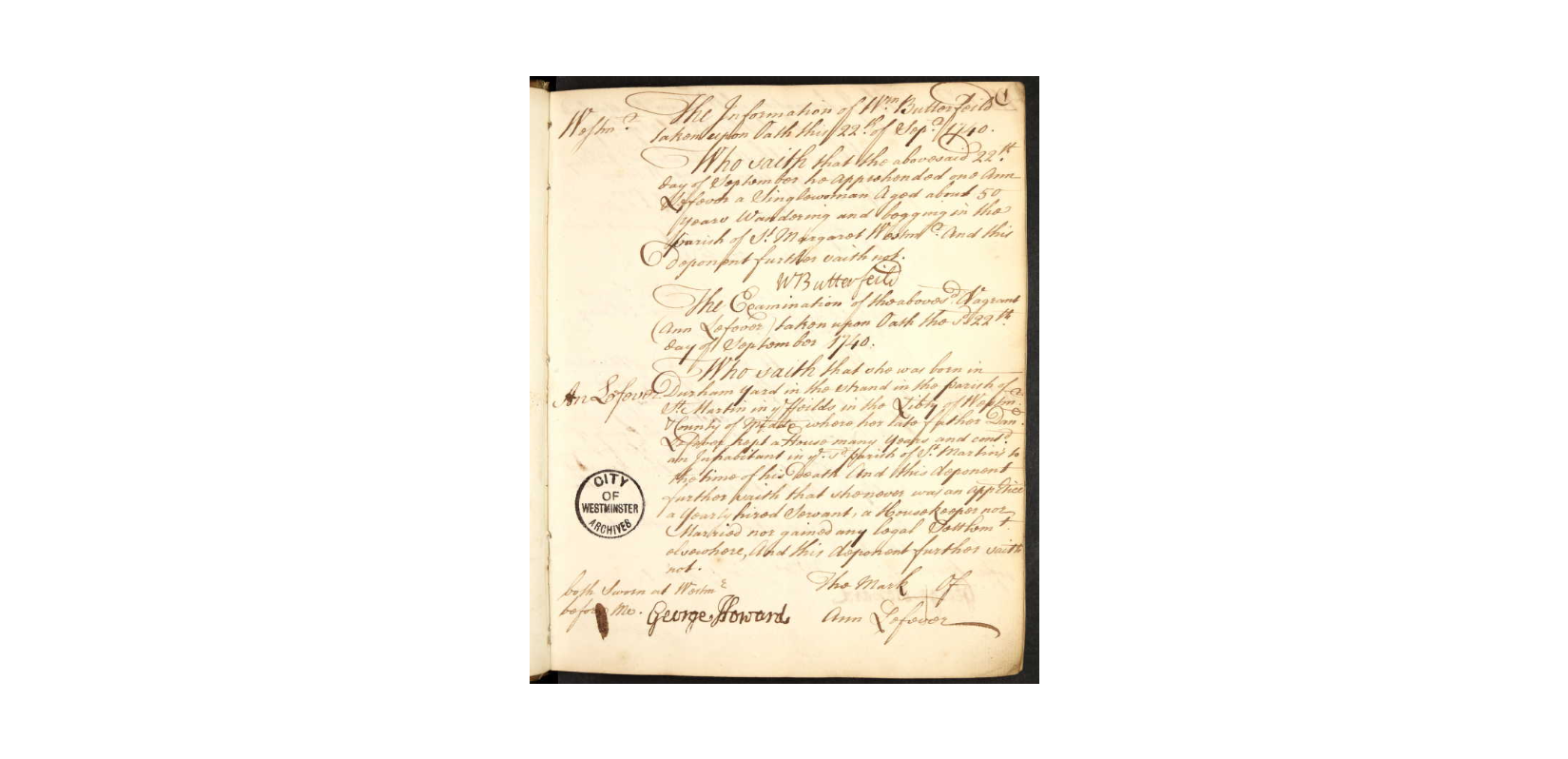
A sworn examination taken before a Justice of the Peace to determine a pauper's legal parish of settlement — the parish responsible for their poor relief. The examination typically records the person's full name, age, parentage, places of previous residence, employment history, and marital status. Settlement examinations are among the most detailed personal documents in the archive for ordinary people's lives.
Removal Order
An order directing that a pauper be returned to their parish of settlement when they became chargeable to a different parish. Removal orders name the individual, their family, and both parishes involved, and are therefore valuable genealogical sources.
Bastardy Bond
A bond given by the alleged father of an illegitimate child, binding him to pay for the child's maintenance and indemnifying the parish against the cost of supporting them. Bastardy bonds name the mother, the alleged father, and sometimes other family members.
Poor Rate
A local tax levied on property occupiers to fund poor relief. Rate books list every rateable property in the parish with the name of the occupier and the amount assessed, making them useful for tracing where ancestors lived even when other records are sparse.
Workhouse
An institution where paupers unable to support themselves were housed and set to work in exchange for poor relief. Workhouse admission and discharge registers, creed registers, and punishment books can provide detailed information about poorer ancestors.
Courts & Legal Proceedings
Deposition
A written record of sworn testimony given by a witness in a legal case. Depositions record the witness's name, age, occupation, and place of residence before setting out their answers to written questions (interrogatories). They are among the most personal and detailed documents in the archive, frequently naming family members, neighbours, and business associates.
Deponent
A person who gives a deposition — sworn written or oral testimony in a legal proceeding. In Chancery records, the deponent answers a series of written questions (interrogatories) put to them by the opposing party.
Chancery
The Court of Chancery was the principal court of equity in England and Wales, operating until it was absorbed into the High Court in 1875. Chancery heard disputes that common law courts could not resolve — typically involving trusts, property, and contested wills. Chancery records at The National Archives are an extraordinarily rich genealogical source, particularly for the 17th and 18th centuries.
Bill of Complaint
The document by which a plaintiff began a case in the Court of Chancery, setting out their grievance and asking for equitable relief. Bills of complaint often contain detailed family histories and are invaluable for establishing relationships between individuals.
Interrogatory
A written question put to a witness in a legal proceeding, to which they must give sworn answers (depositions). Interrogatories were prepared in advance by lawyers and put to each witness in turn. The answers frequently contain precise personal details found nowhere else in the archive.
Quarter Sessions
The court held four times a year by Justices of the Peace, dealing with a wide range of criminal and administrative matters — petty crime, licensing, highways, and poor law appeals. Quarter Sessions records are held in county archives and are an important source for local and family history.
Assize
The superior criminal court held in each county, presided over by travelling royal judges. Assizes dealt with the most serious crimes. Assize records include indictments, depositions, and verdict books.
Ecclesiastical Court
Church courts had wide jurisdiction in pre-modern England, handling probate (until 1858), matrimonial disputes, defamation, and the morals of the laity. Ecclesiastical court records — including cause papers, act books, and probate records — are held in diocesan archives.
Dates & Calendars
Old Style / New Style
England used the Julian calendar (Old Style) until 1752, when the Gregorian calendar (New Style) was adopted. The Julian calendar was 11 days behind the Gregorian, so 2 September 1752 was followed by 14 September 1752. Dates before 1752 in English records are Old Style. This matters when comparing English records with continental European documents, which had already adopted the Gregorian calendar.
Lady Day
25 March — the Feast of the Annunciation and, in England, the legal start of the new year until 1752. This is why dates between 1 January and 24 March in old documents can be confusing: a document dated '10 February 1648' in Old Style corresponds to 10 February 1649 in modern reckoning. Many genealogists write such dates as '10 February 1648/9' to make this clear.
Regnal Year
A way of dating documents by the year of a monarch's reign rather than by the calendar year. '3 George II' means the third year of King George II's reign (1729–30). Regnal years appear frequently in legal documents throughout the medieval and early modern period and require a table of regnal years to convert to calendar dates.
Anno Domini (A.D.)
Latin for 'in the year of the Lord' — the Christian calendar system counting years from the birth of Christ. You will also encounter Anno Regni (A.R.) meaning 'in the year of the reign', used in regnal year dating.
Quarter Days
The four days that divided the English year into quarters, used for paying rents, settling accounts, and beginning legal terms: Lady Day (25 March), Midsummer (24 June), Michaelmas (29 September), and Christmas (25 December). References to 'rent due at Michaelmas' or a lease beginning 'at Lady Day' appear throughout property records.
Transcription Conventions
Diplomatic Transcription
A transcription that faithfully reproduces the original text exactly as written, preserving original spelling, punctuation, capitalisation, and abbreviations. A diplomatic transcription is the gold standard for historical documents because it preserves the document's integrity and allows the reader to see exactly what the scribe wrote.
Uncertain Reading
Where a word or passage cannot be read with complete confidence, a responsible transcriber marks it as uncertain. Conventions vary between transcribers, and some use marks such as [?word] or [?]. In Heritage Script transcriptions, any word or passage that cannot be read with confidence is marked [unclear], so nothing is ever guessed or silently left out.
Expanded Abbreviation
Historical documents are full of abbreviations — letters omitted from words, with a mark above to indicate the omission. When a transcriber expands these into full words, the expanded letters are conventionally placed in square brackets: 'Test[amentum]' shows that 'amentum' has been added by the transcriber, not written in the original.
Sic
Latin for 'thus' or 'so'. Written [sic] after a word in a transcription to indicate that an apparently strange spelling or error is exactly what appears in the original and is not a transcription mistake.
Lacuna
A gap in the text — a passage that is missing because the document is damaged, torn, or otherwise defective. Conventionally marked with [...] or [lacuna] to distinguish missing text from illegible text.
Recto / Verso
The two sides of a sheet of parchment or paper. Recto (abbreviated 'r') is the front or right-hand page; verso (abbreviated 'v') is the back. Multi-page documents are referenced by folio number and side: 'f.3r' means folio 3, recto.
Folio
A single leaf of parchment or paper in a bound manuscript or register, numbered on one side only. A manuscript of 100 folios has 200 pages of text. References to archival documents frequently use folio numbers: 'f.47v' means folio 47, verso (back).
Scribal Error
A mistake made by the original scribe — a word written twice, a name misspelled, a figure transposed. A transcription should preserve scribal errors exactly as written, marking them [sic] where the error might be mistaken for a transcription mistake.