Wills & Probate · Getting Started · June 2026
Can’t Read an Old Will? Here’s What To Do
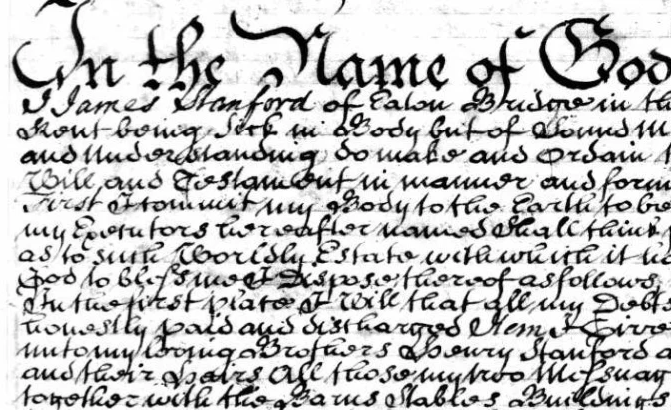
You’ve found an ancestor’s will and you cannot read a word of it. You are not alone — and you are not failing. Old English wills written in secretary hand look almost nothing like modern handwriting. Here is why they are so difficult, what your options are, and when professional transcription is the right answer.
Secretary Hand · Getting Started · June 2026
What is Secretary Hand?
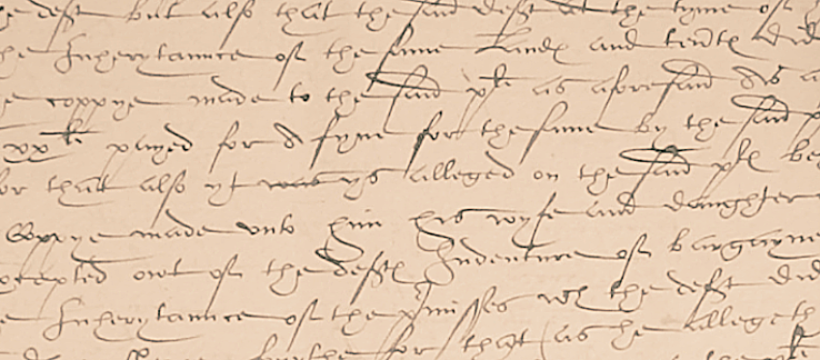
A clear guide to the script used in British legal and administrative documents from roughly 1550 to 1750 — what it is, where it came from, and why certain letters look so unfamiliar to the modern eye.
with its furniture
Probate · Research Skills · June 2026
How to Read an Old Probate Inventory
Probate inventories list every object an ancestor owned at death — room by room, shilling by shilling. Where to find them, what they contain, and how to interpret the occupational and social detail they preserve.
to Almightie God
Wills · Family History · June 2026
The Hidden Detail in Tudor and Stuart Wills
Beyond the bequests: what the religious preamble, witness names, property descriptions, and debt clauses of a 16th or 17th century will reveal about an ancestor’s life, beliefs, and social world.
Parish Registers · Getting Started · June 2026
I Can’t Read My Ancestor’s Parish Register Entry
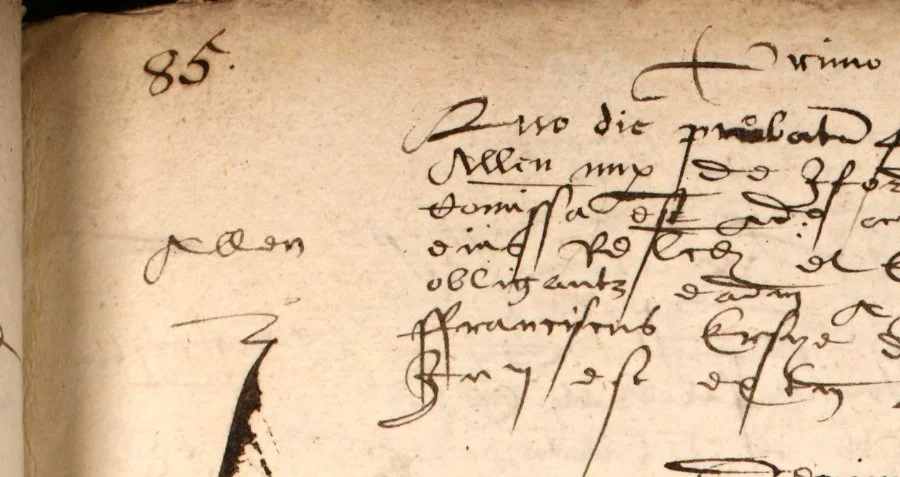
Parish registers are among the richest sources for family history — and among the most difficult to read. What the different register types contain, the scripts they use, and how to get a reliable transcription when the handwriting defeats you.
Archives · Research Skills · June 2026
How to Order Documents from The National Archives
A step-by-step guide to finding and ordering documents from TNA at Kew — what catalogue references mean, how the ordering system works, and what to do when you receive a document you cannot read.
saith...
Chancery & Equity · Research Skills · September 2026
How to Read a Chancery Deposition
Pleadings and depositions are not the same document. What a deposition actually is, how the interrogatory-and-examiner process worked, and where to find one at The National Archives.
1648/49
Dates & Calendars · Research Skills · September 2026
Old Style vs New Style Dates, and Regnal Years
Why an English document dated 10 February 1719 might really mean 1720, what the 1752 calendar change actually did, and how to work out a regnal year without getting caught by the Charles II trap.
by the rod
Manorial Records · Research Skills · September 2026
Manor Court Rolls and Copyhold, Explained
Why your ancestor's name might appear on a roll of parchment decades before any parish register mentions them. What a manor court did, how copyhold tenure and surrender-and-admission worked, and where surviving rolls are actually held.
that he was born...
Poor Law · Research Skills · September 2026
Settlement Examinations and Poor Law Records
How the Old Poor Law's settlement system worked, and how to read a settlement examination, removal order or bastardy examination — often the closest thing to an ancestor's own autobiography you'll ever find.
Reference · Research Skills · September 2026
Reading Old Money: £/s/d Explained
What a mark, a noble, a groat and a guinea were actually worth, and how to read a pre-decimal sum like £4 3s 2½d — a working reference for wills, inventories and accounts.